
Five days in Ghana was not long enough. I could’ve stayed there for another week or so just volunteering with the organizations I got to interact with. Not only were the waters of the coast beautiful, but the people were too. Everyone was very welcoming and the children especially were so curious about us.
I had a very diverse few days between volunteer programs, nature, and history, leaving me with a very rounded experience, and one where my soccer skills seem very lacking. Anyway, here’s an overview of my days.
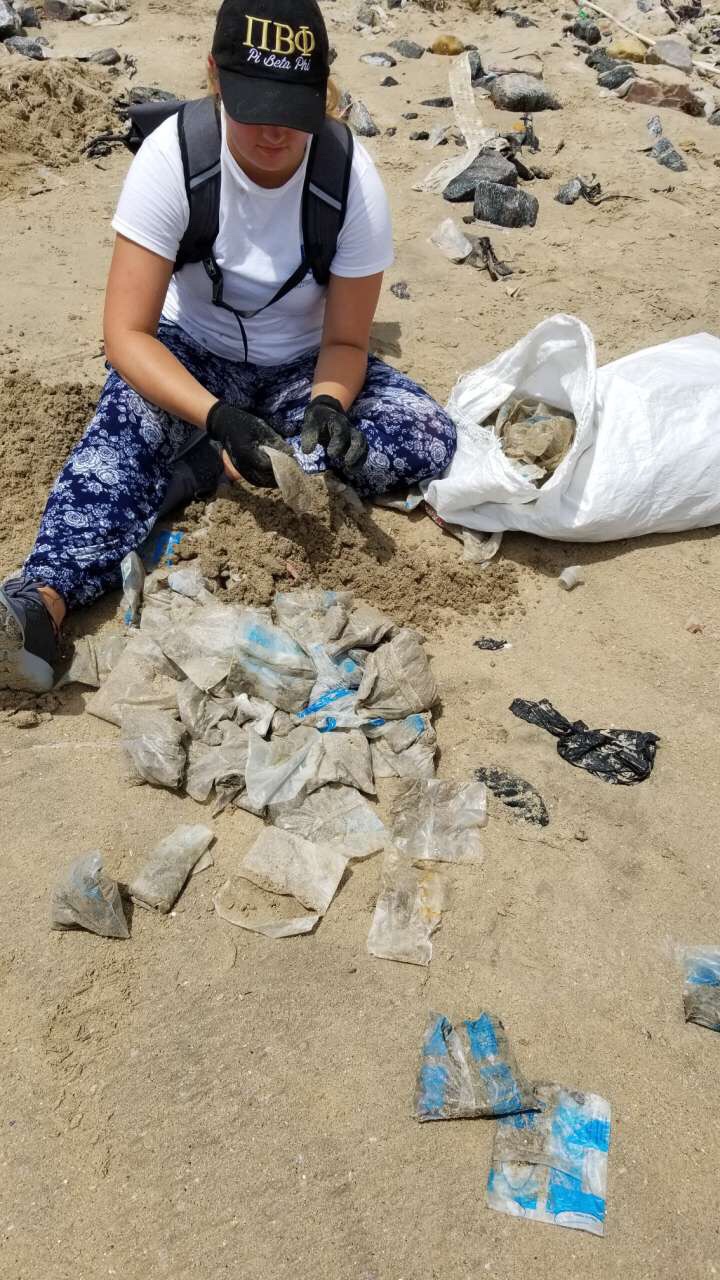
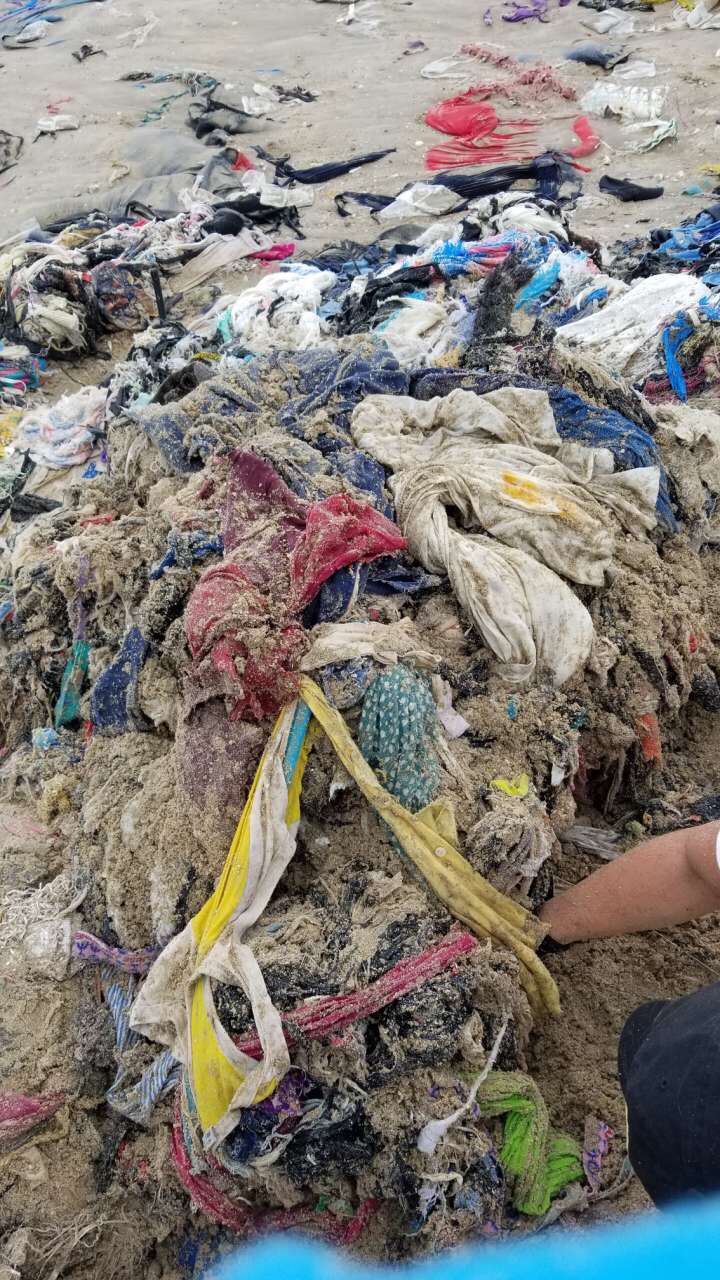
Day 1- We arrived into port around 0630. I’m not exactly sure when because I woke up to the sound of us docking. We were told we were getting in at 0730, but we arrived early. I had a field program called “Trashy Bags” Social Enterprise Project. We were supposed to depart the ship at 0900, but the ship took longer to get cleared than expected so we ended up departing closer to 0930. We headed to a beach near the Regional Maritime University in order to have a two-hour beach clean-up through an organization called Plastic Punch. Plastic Punch basically works towards promoting environmental cleanliness and educating people, as well as finding eco-friendly disposable options. Each person chose a different item to pick up on the beach. The most common things were plastic bottles, trash bags, shoes, and “sachets”, which are the small bags of water that contain the drinking water for people. I choose to pick up the sachets because there were so many. These baggies, which normally had a little hole ripped in them so a person could drink water from it, had so much sand in them. Some of the bags were completely full of sand and I couldn’t find the hole that it got in so we would have to rip the bags open to dump it out. There was also this biggest compilation of fabrics twisted together that I tried to get out with the help of four other people, and we ended up not being able to get it fully loose. I was covered in sand to my shoulders and my shirt was soaked through with sweat, but the two hours went by so fast it only felt like we had been cleaning for 45 minutes. We collected 9029 sachets, 4247 plastic bottles, 281 textiles, 406 shoes, and more in our group of 34
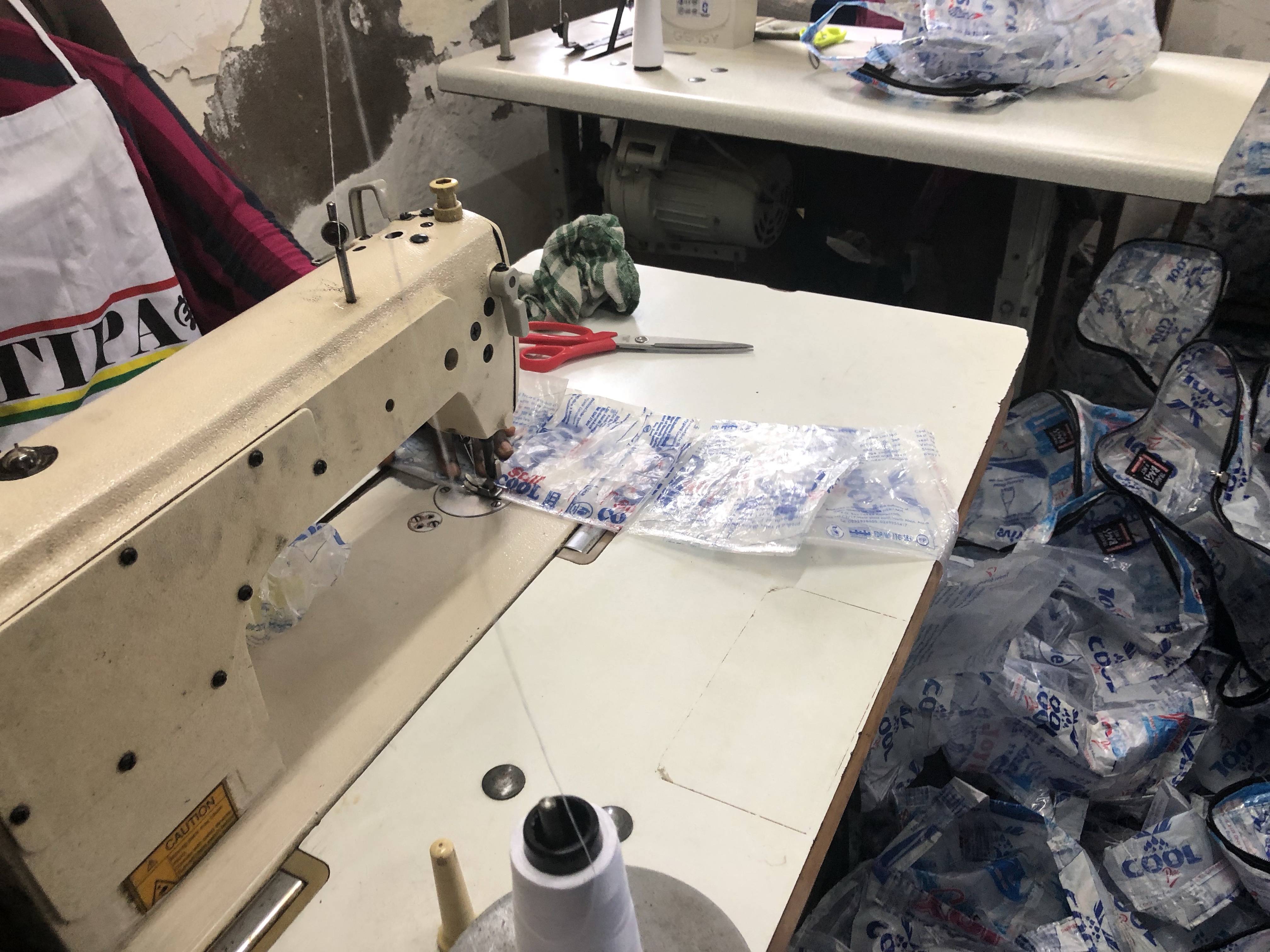
After we finished at the beach, we headed to Trashy Bags Social Enterprise. After a quick and rainy lunch, we were all soaked, yet satisfied. We had fried plantains, which after Turks and Caicos last spring break is one of my favorite “desserts”. Once we finished eating, we were given a tour of the Trashy Bags facility. Trashy Bags is a social enterprise that takes plastic trash, such as water bottles, plastic bags, and sachets, and turns them into eco-friendly products. Items most commonly produced are reusable grocery bags called Smartbags, regular bags, and tablet/computer cases. They also use recycled fabrics to make these items. They get their trash from many different groups and people in order to make their products. We went through all the rooms to see the flow of the process. We started in an outside garage type room where the working clean, straightened, and inspected the sachets in order to make sure they were only ripped in one corner. Then they were moved into the production process. Everyone works on every item, just like an assembly line. One person was in charge of the bottom of the bag, another the sides, and another the handle. It was interesting because they used a sewing machine on the plastic just like they would if they were to be making a dress from fabric. Once we finished seeing the facilities, we all did a little sustainable shopping and our program called it a day.
One thing I was not expecting in Ghana was major traffic, but man was I wrong. Back home and at school I never really have to deal with traffic interfering with my timeline of the day, unless there is a train in Grand Forks of course. When I lived in Virginia for the summer of 2018, that was the most traffic I had to deal with, which makes sense because between Chesapeake, Norfolk, and Virginia Beach, there’s about one million people in a 30 mile radius (don’t take my word on the radial distance for sure). I mean there, if I left for work five minutes late, I would be stuck in traffic and it would take me a lot longer to get there. Here though, I was not expecting that. Much to my surprise, what only took us about a half an hour of driving in the morning, took us about two hours to get back to the port. I was so happy to get back to the ship to shower because I still felt so gross from the morning, but the rain shower at least had gotten the sand off. There were a bunch of vendors set up right outside our gangway, so once I was clean, I headed out to look around. Immediately I was bombarded by people trying to get me in their shops, but I was really only looking for paintings, so I kept my head down and went to the one shop where the owner wasn’t trying to flag me down. He pulled up a chair so he could show me all of them and I ended up liking a couple. Once I made my purchases, I was back on the ship for dinner and the rest of the night. I ended up relaxing and watching the second Pirates of the Caribbean, which I had never seen any of until the day before port.
Day 2- My second field program of Ghana was called City of Refuge. We departed the ship around 0830 and had about an hour drive to City of Refuge Ministries or CORM. We arrived there closer to1000 due to some confusion with directions. Once we arrived, we were welcomed by the founders and a whole swarm of kids. We headed to the prayer house on the grounds in order to have a short information session about what City of Refuge does.
City of Refuge Ministries works to rescue children from child slavery, as well as working towards preventing children from being sold by empowering single mothers who are vulnerable to that risk. They work along with IJM to rescue children enslaved on Lake Volta. Thousands of children are working along this lake in positions of slavery. The children receive no education or care. We were told stories of children drowning on the Lake and being afraid of their rescuers. Once these children are rescued, CORM tries to give these children a childhood since so most of them only know work on the Lake or domestic slavery.
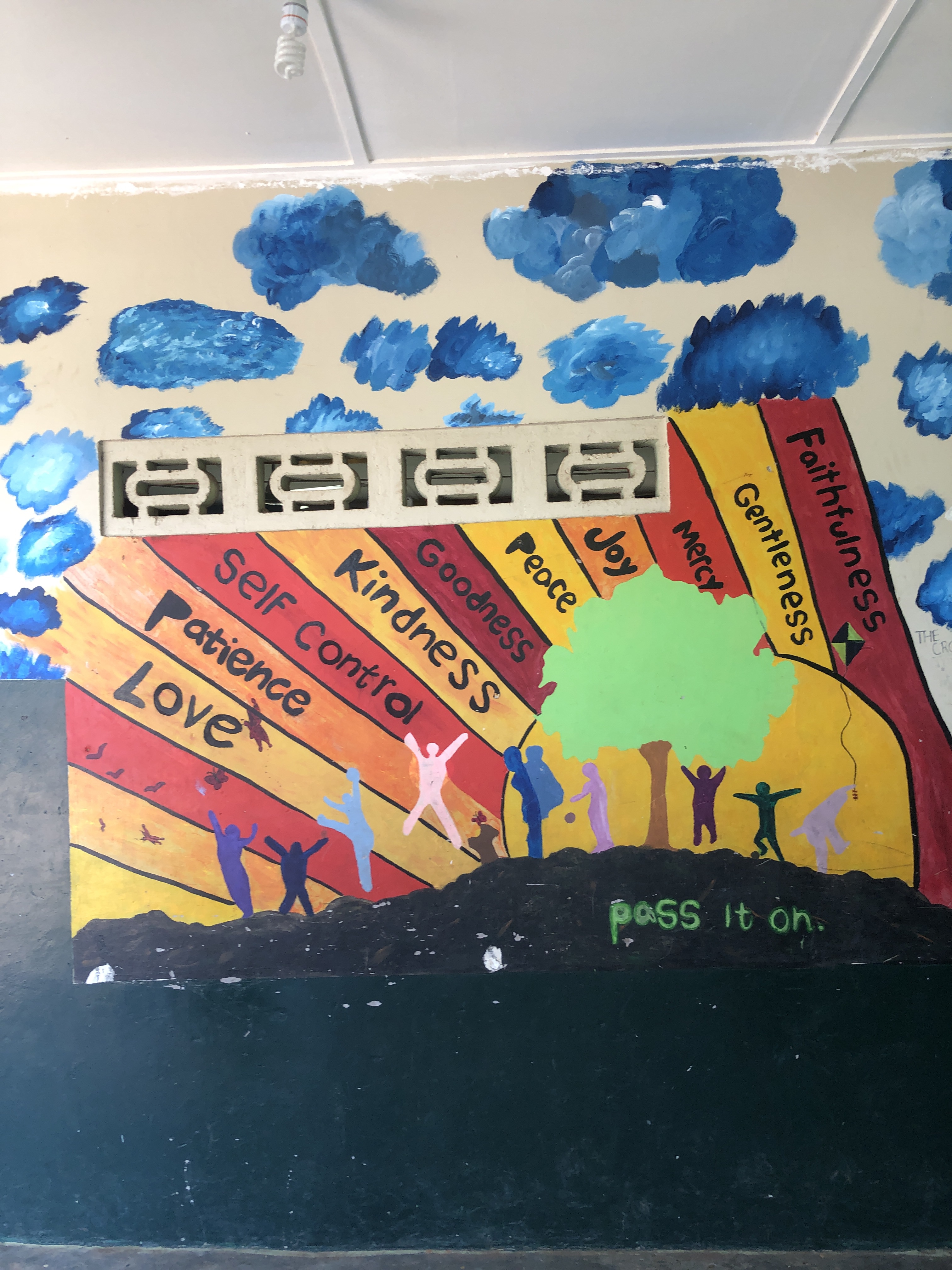
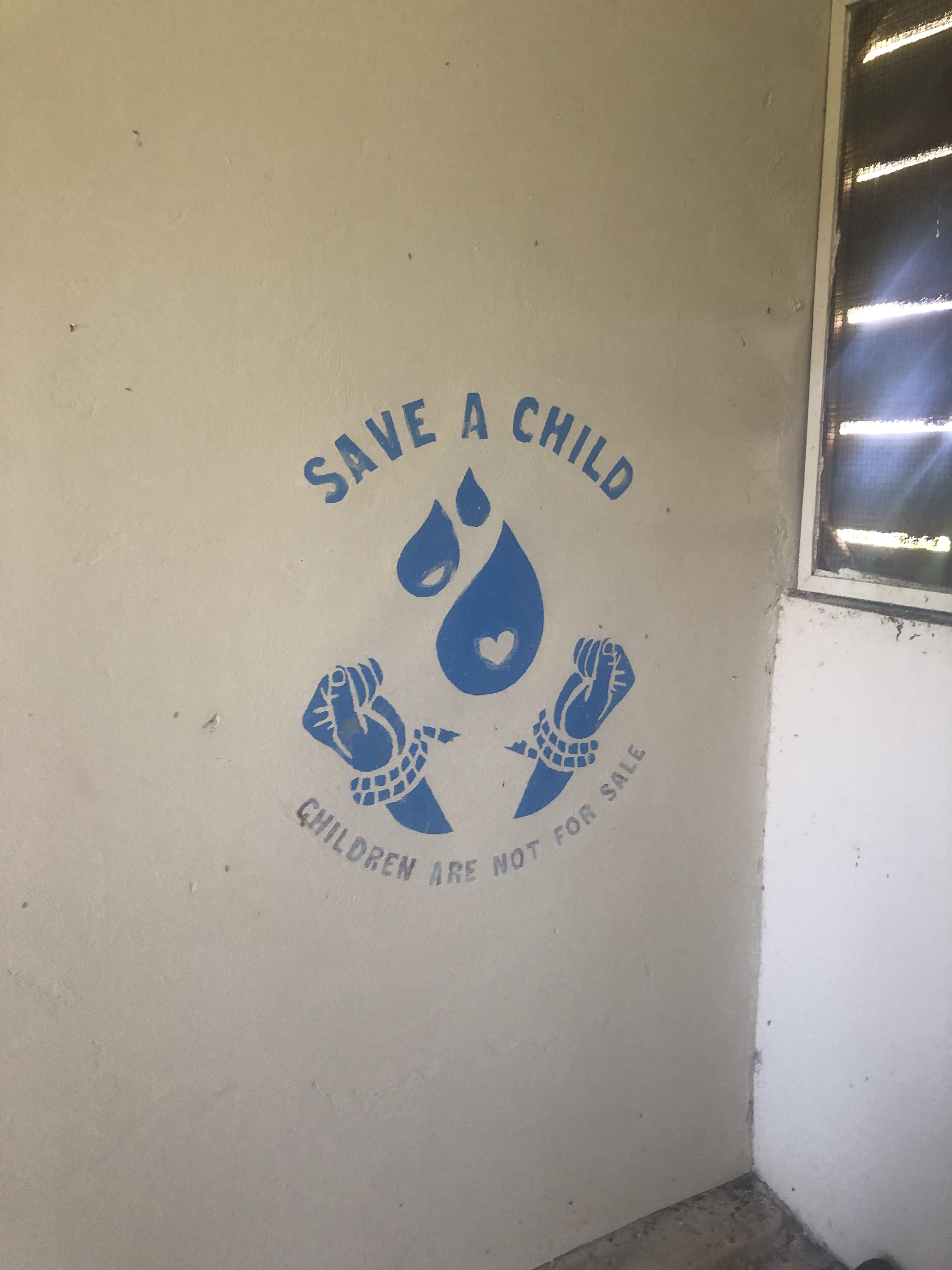
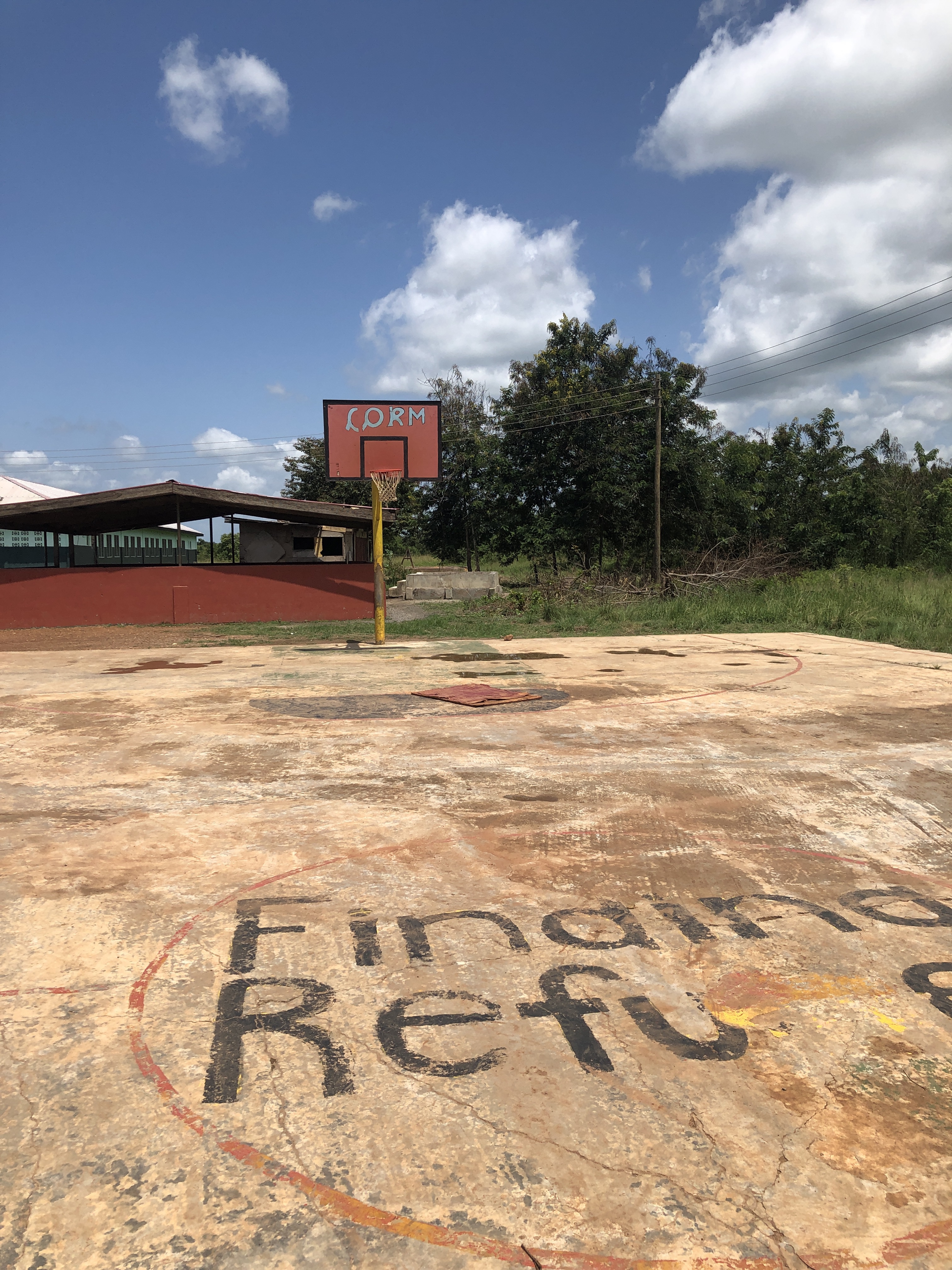
After that, we split into groups of about ten people and went with the different staff in order to see the entire complex. There were a few living spaces for some staff and volunteers in addition to the two buildings for the kids. There is a school through the organization right on the grounds, which we were told is one of the best schools in the area. One other really interesting was that they had their own water purifier and they packaged it in the small baggies, but the bags had their message of “children are not for sale” on them. They also had a shop with many single mothers involved, which goes along with them trying to educate mothers and help them get an income so they can take care of their children and not give them up. In addition to the buildings, they also had many sporting areas, such as a football(soccer) field, basketball court (that had been donated by another organization Finding Refuge), and a volleyball court.
After lunch, we had the opportunity to play with all of the kids. Our group, of about forty, split into many different groups with us all doing different activities. Some people played volleyball, others ran relay races, and some just sat and talked. I ended up getting involved with football, or soccer. We started off kicking the ball around just passing, which was really good because it’d been about two years since I’d touched a soccer ball for a game setting. After that, the boys we were passing with wanted to play a game, so we separated into teams of six and decided to play the short length of the field (then cut in half again), and we had to hit a little post in order to score a goal. Let me just say, it was a good thing we didn’t play full field because I was so tired after about five minutes. I also was getting schooled by every seven to twelve-year old out there. There were also two older boys, about sixteen, playing, but I didn’t feel near as bad about getting crushed by them. Anyway, we played for about forty-five minutes and we decided to take a break to get out of the sun and get some water (the UV was like 11 and it was about 85°F). I walked back to the prayer house to get some shade and water before heading back out to the courts where a very intense volleyball game was occurring. I watched for the rest of the time we were there. We left around 1500 to get back to the ship.
Now, there’s something to be said for all the kids, and teenagers, that we spent the day with. They haven’t exactly had to easy to put it nicely. Some of them have really struggled, but you never would’ve guessed by how friendly and happy these kids seemed. Most of them were insanely good at sports and even the young ones just wanted to play. They were so curious about us and just wanted to learn as much as they could. Some of the younger boys could also braid hair surprisingly well (my guy friends really need to step up their game). They all have such big dreams which is a beautiful thing for young people and I hope they all pursue them. One lasting thought that Johnbull, one of the founders left us with, was that it is great to have dreams and it is easy to talk about them, but it’s a whole other thing to go actually chase ones dreams and when you do, it is an amazing thing. I still can’t fully put into words how wonderful this ministry is and how much I was impacted by it.
Once we got back to the ship, I showered, ate, and worked on this post for a bit before watching a little of Titanic, my favorite movie (ironic that I’m on a ship, right?), and calling it a night.
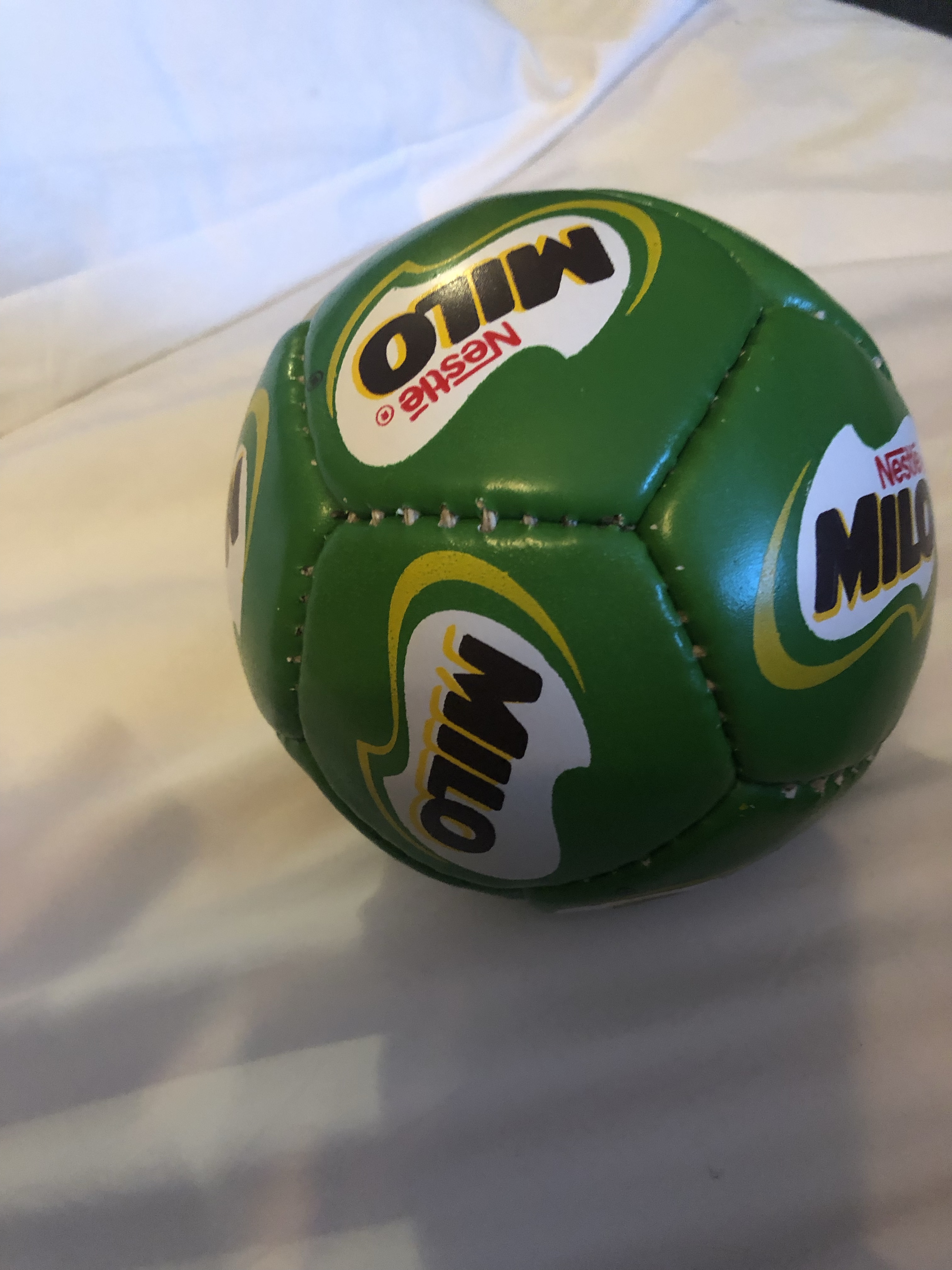
Day 3- I was up around 0645 for my next field program. This one was called “Alive and Kicking” Football Workshop. We headed out around 0800 and we got to the Alive and Kicking facility a little before 0900. First the general manager (GM) told us a little bit about how the project got started. It is the only non-profit ball manufacturer in the world. They create jobs for those in need and donate balls so children around the world can play. Another goal of the project is to educate kids about health and encourage them to be active.
Next, we were shown around the building to see the process of how the ball patches are made. After all this, we got to make our own (size 0) ball. Now, one may think this is an easy task, you know, how difficult can it be to make a ball that only has a diameter of not even five inches? Well, guess what? It’s hard, very hard. You had to hand stitch the patched together in groups of two inside out and then make one half at a time. I know it doesn’t sound that bad, but it took me about three hours, some blood, sweat, and internal tears my two halves were finished. Then it was time for a lunch break. The guy who had been helping took my table’s balls and put the two halves together with the bladder inside and BAM, I had a soccer ball (with a few holes in my fingers to show for it). I was exhausted after this. Believe it or not, it was almost a full body workout and I felt it after.
After waiting for a hot sec for all the balls to get finished, since the worker had to do this for us, we headed to a local field in order to play a game against some local guys (maybe between fourteen and seventeen). There were seven of them against about fifteen of us. Right away they scored two goals against us (one of the ship kids was our goal; he’s not even five foot). Then they gave us someone to play goalie, who was a rockstar in net, and we ended up scoring once. About half way through, we switched out for the other portion of our group to play them. By then, we had drawn a crowd of like fifty school kids from the school by the field (I think these guys were from there). Our SASers had recruited a few local school children to play for our side so it was more like seven to twenty for the second half. We ended up scoring two goals and winning the game. Now, one might say “okay yeah you won, but they were so outnumbered, that it doesn’t really constitute as winning”, and to that I say yes it does. Those seven guys were so (SO) good. I mean they moved so well, formed great triangles, and passed perfectly. In all, they were just incredible players; we wouldn’t have stood a chance.
There is a reason that soccer is the world’s sport. It can literally be played anywhere. The GM was telling us about how kids will tie together plastic, and rocks, or trash to make a ball and kick it around. All you need is a little open space and something to play with and you can, not other equipment necessary.
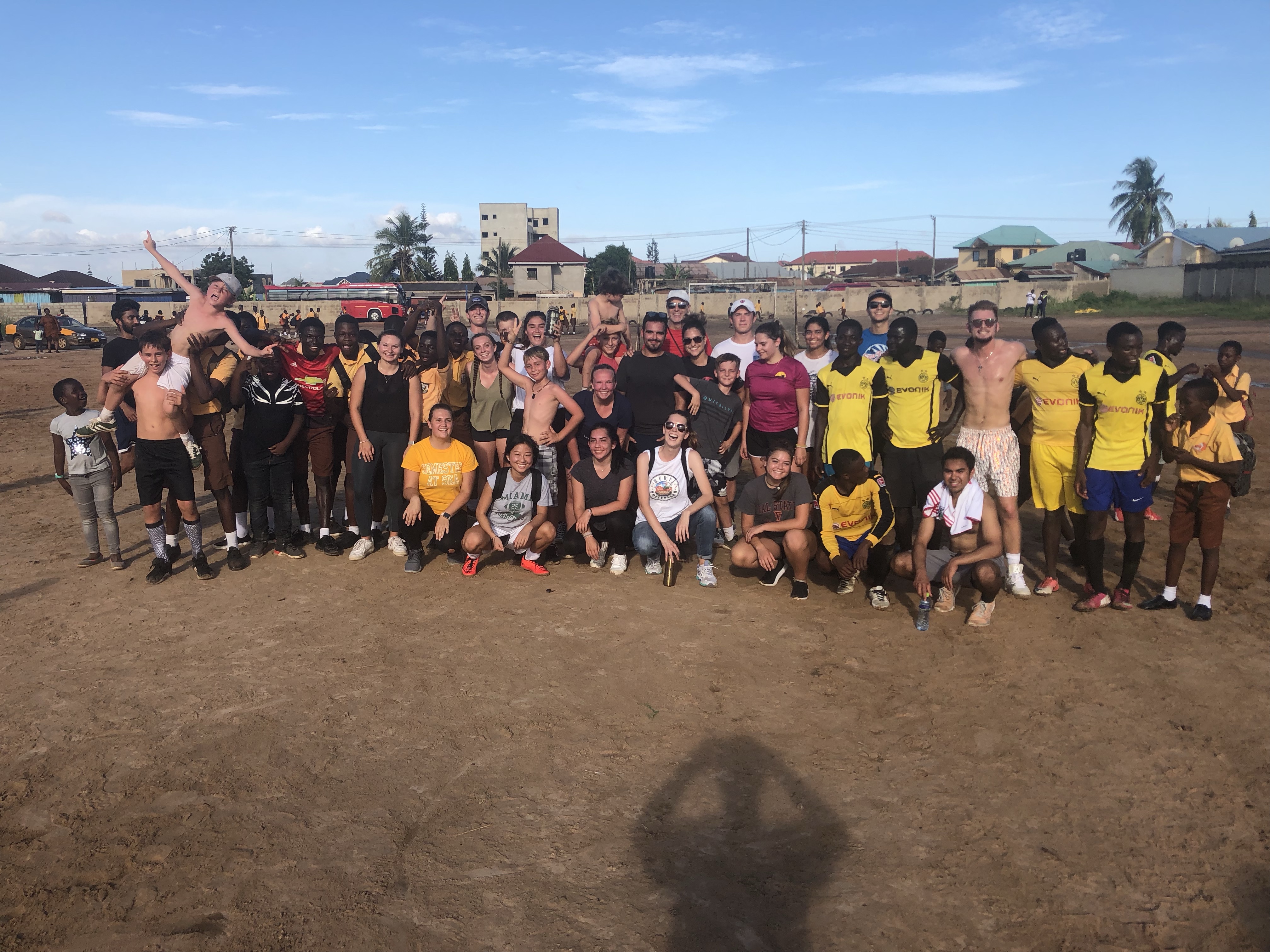
After the game, we took a big group photo before we had to hop back on the bus. We were back by 1650, about an hour before one ship time, so some of us wandered around the shops by the gangway. After a little shopping, I was back on the ship by 1710. Both my roommates were back by then, so we chatted a bit about our days. Then I grabbed dinner around 1730 and headed to Lido Deck (top deck) to recap my day and wait for us to leave port since we were moving from Tema to Takoradi for our last two days in Ghana.
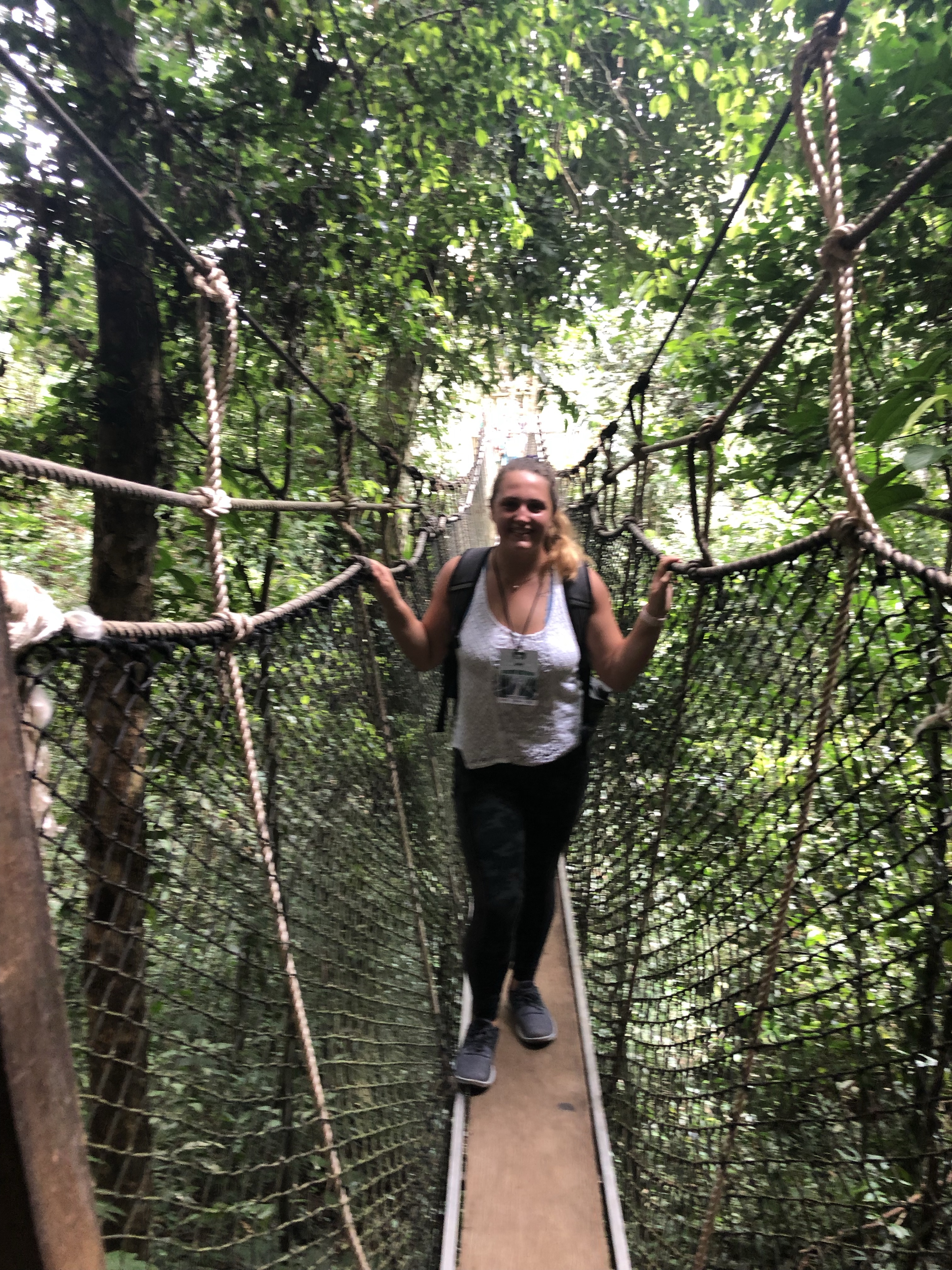
Day 4- My last field program of Ghana awaited me on the fourth day. I had a lot of my good friends with me and my roommate was able to get on through stand-by. For this one, we left for the Kakum National Park around 0800. It was about a two-hour drive from our port in Takoradi. I was able to sleep a little, but not more than a half an hour. We arrived at the park around 1000. From there, we split into two groups for the canopy walk. I was in the first group and we started on our way. We took a few breaks along the way since it was mostly uphill to the canopy. Our guide told us that the park is home to monkeys, elephants, birds, and more. Another thing we were told is that there are many snakes in it, and they don’t trim the park’s trees because that would be disturbing the homes of the snakes in the trees. In total, the whole walk only took about an hour. The canopy itself was really cool. We went in groups of five across it. It was about as stable as a suspended bridge with rope can be. There was some netting underneath and rope sides that you could hang onto. I tried to not use hands a few times, but it was so difficult to balance on most of them. It depended how stable the people on with you were. It took maybe ten minutes to get through all the canopies and I was in the first group, so we sat and waited (and cooled off) while the other groups went through.
Once everyone finished the canopy and trek back, we were on the bus headed to the Rainforest Lodge for lunch. After a buffet style meal (with PLANTAINS!!!), we headed outside to a little courtyard for a music performance by a group of Ghanaian drummers. This performance was wild, I mean it was amazing. These seven were so talented and energetic; you could tell they obviously loved what they were doing. After they performed some songs on their own, they invited some of the SASers up to play with them. The SASers were shown the different ways to hit the drum and then they did an actual melody. It was really cool to see. At the very end, one of the performers had studies dance so we all got up with him and tried some of the moves. Honestly, it was a blast. We said our goodbyes after and were back on the bus home. It took closer to three hours to get back because of traffic. I ate dinner, showered, watched the rest of Titanic and called it a night.
Day 5- On the last day in Ghana, I had my final field program of the voyage for Philosophy. For this class, we were going to Cape Coast University for a lecture on “roots tourism”, since we were with a tourism class and the Slavery in America class. Roots tourism is what some call the tourism where people traveling have an ancestral relationship to their destination, normally due to being displaced. This has been becoming more prominent in Africa and specifically Ghana where 2019 was deemed the Year of Return.
After the lecture, we headed to a small place on the coast to eat called Coconut Grove Bridge House. They had plantains in their buffet set-up, so I was satisfied. We were probably there for a little over an hour and you could see the Elmina Slave Castle from where we were sitting. Now originally at the beginning of the day, that’s where we were supposed to go next, but plans change, and we ended up go back to Cape Coast to go to the slave castle there.
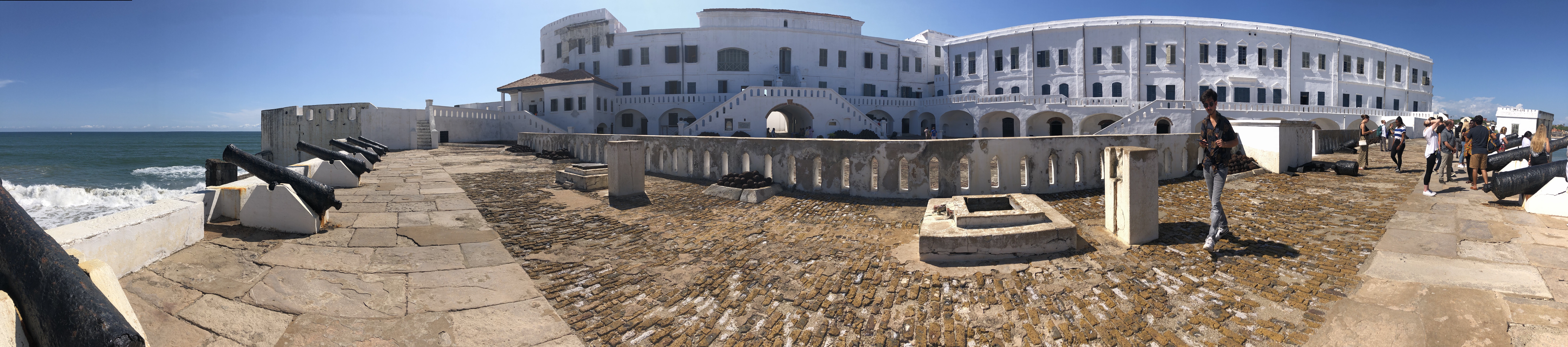
We were in Cape Coast Castle for about an hour with our guide and I’m not really sure I know how to explain how a place like that makes one feel.
We were shown the male and female dungeons where the make-up of the floor had been tested and shown to contain human matter. This is because there were no adequate places for people to relieve themselves, so it all went on the floor in many forms.
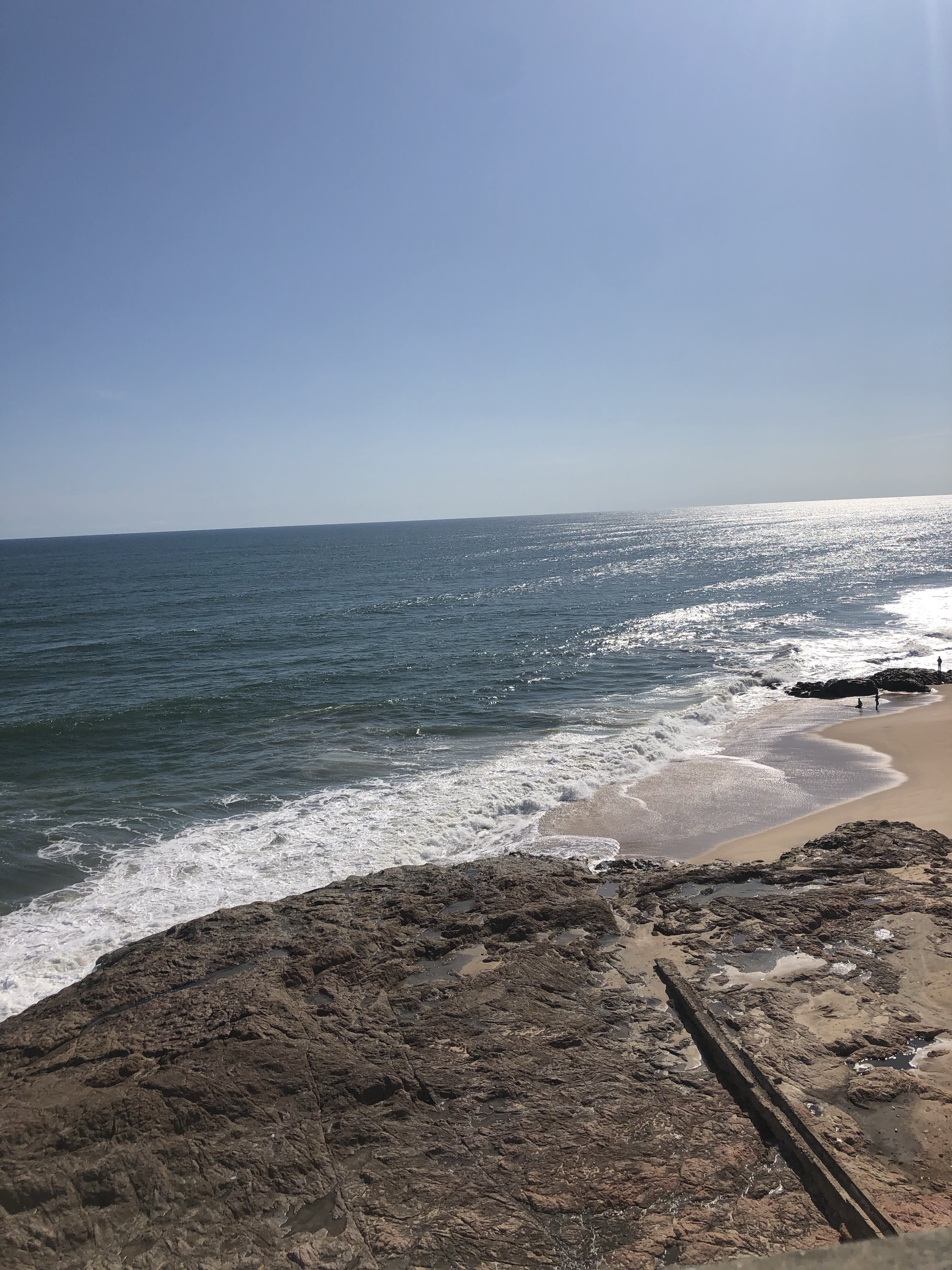
There is a church right above the male dungeon which makes one really question how such terrible acts could’ve taken place. The positioning and set-up on the entire place as meant to completely break people’s spirits. There was a “punishment” room where they would place. People who “acted out” or fought back. In this room, there were no survivors after 72 hours since there was no light, air flow, or nutritional substance provided. We then got to see the entrance and exit of the tunnel, but it had been blocked so we couldn’t go through. We also saw the person is charge’s living space which was a complete contrast with the dungeons that lie below. On that same floor is also where the slaves would be bought. After that, we went through the “Door of No Return”. On the other side, seeing the beautiful water and coast made all the horrors that took place inside so difficult to come to terms with. It’s unbelievable how a place of so much beauty could hold such an awful history. There were children playing on the beach and in the water, and people selling stuff outside. It was as if the castle was a different building, and in a way, it was because when we turned to look back at the door we had come through, a sign above it read “Door of Return”. People would come to Ghana and go through these “doors of return” almost like they were finally coming home.
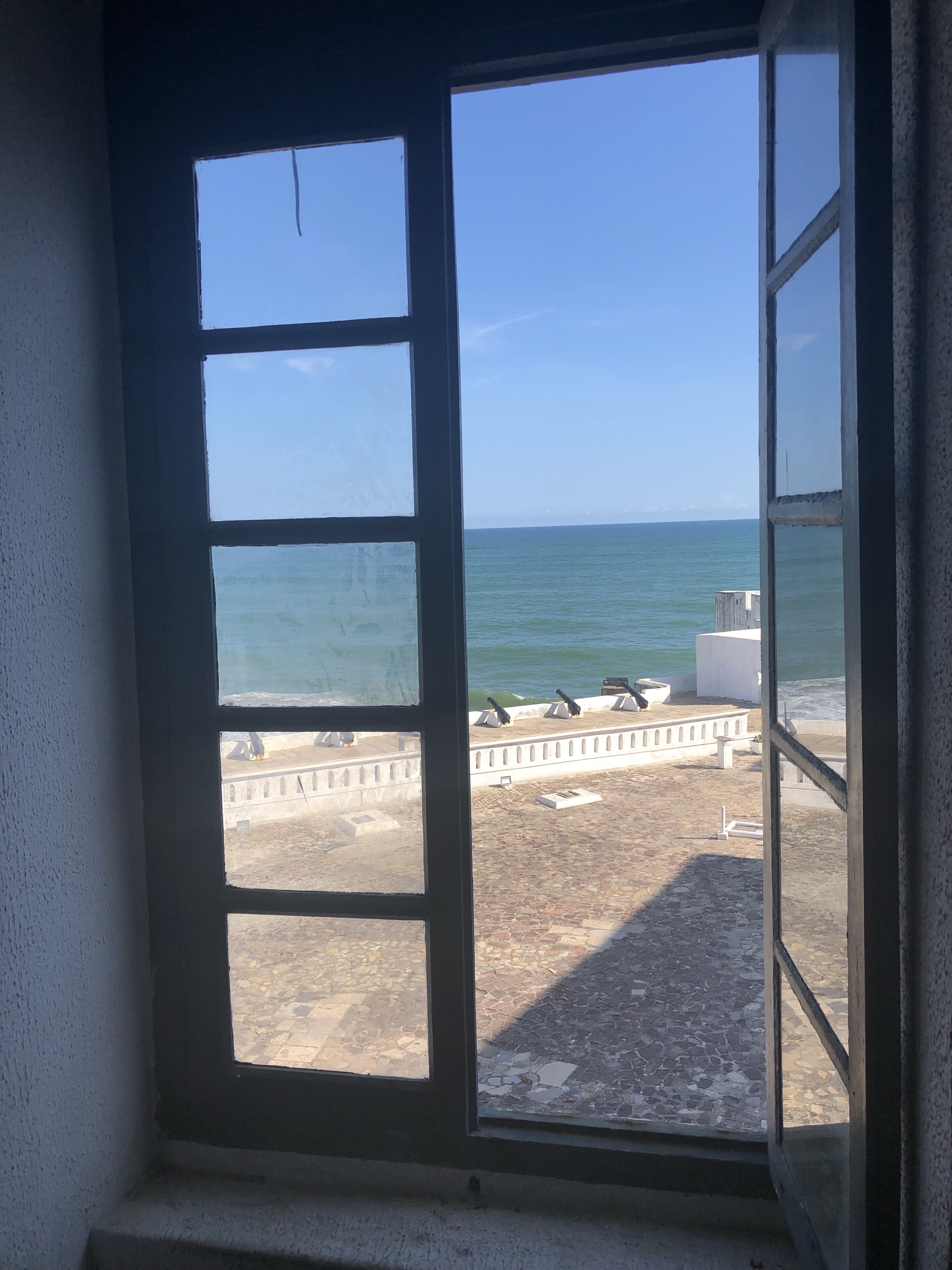
On the bus back, we were supposed to have a discussion about it, but our professor knew we were all feeling different things, so he left us alone on the bus and just had us all reflect.
Except for talking about this last day, I had the rest of this post finished about a week ago; I. just didn’t know how to talk about the field class, and I think that says something in its own way. Now, it has been a little over a week and I’m still not sure how to put into words what that experience was right. I mean how does one actually process and understand something like that? I personally believe that everyone should visit a place like this at least once in their life, maybe not the castles, but just a place where something terrible happened. I don’t say that to sound to sadistic, but I think that being in a place of true tragedy can be humbling and lead a person to some self-revelation or just to appreciate life a little more.
In the end, everyone feels and responds differently to experiences like these for their own reasons and I think I’m going to leave it at that.
Ghana in the end was eye-opening and the thing is, the problems they have aren’t so different from the ones back home.
- For example, litter and trash in the ocean is an international problem. A lot of the trash on the beach we cleaned up wasn’t from Ghana, but rather it had washed onto the shores from the ocean. They had other countries trash as well. There are beaches all over the world, and the U.S. that need to be cleaned up.
- Human trafficking is also a big issue all over the world, as well as back home. Now in the states, I feel like I hear more about sex trafficking and less about other forms of trafficking, but either way it still takes place and it is a violation of human rights.
- Literacy and health are also big discussions. My sorority, Pi Beta Phi, supports a philanthropy of Read, Lead, Achieve, which helps bring attention to the illiteracy rates of the country and helps kids get engaged with reading. Although the U.S. is fairly educated compared to others, there is still a large portion of people who can’t read higher than a third-grade level. Teaching kids, and people in general, about health issues and hygiene is important.
I really enjoyed my time in Ghana and found it to be a very friendly and beautiful place. In my own travel plans in the past, I had never planned on going to continental Africa, but I’m sure glad I did.
With Bated Breath, Abby Lynn
I talked about a lot of different organizations so here are the links to their sites if anyone would like more information:
- Plastic Punch: http://plasticpunch.org/ (Website not active quite yet)
- Trashy Bags: http://www.trashybags.org/
- City of Refuge Ministries: https://www.cityofrefugeoutreach.org/
- Alive and Kicking: https://aliveandkicking.org/
 With Bated Breath, Abby Lynn